










The artificial intelligence race has produced a familiar cast of winners.
Software companies are building increasingly capable models. Cloud providers are investing billions in AI infrastructure. Semiconductor giants continue competing to deliver faster and more powerful chips.
But every technology revolution eventually reaches a point where software begins to outpace the hardware beneath it.
Artificial intelligence is approaching that point.
As enterprises deploy AI across every part of their business, demand for computing power is growing at an extraordinary pace. More capable models require more processors, more electricity and larger data centres. The challenge is no longer just making AI smarter. It is making AI sustainable.
That is creating a new opportunity—one that sits well below the application layer but could prove just as valuable over the coming decade.
It is the opportunity to reinvent the computer itself.
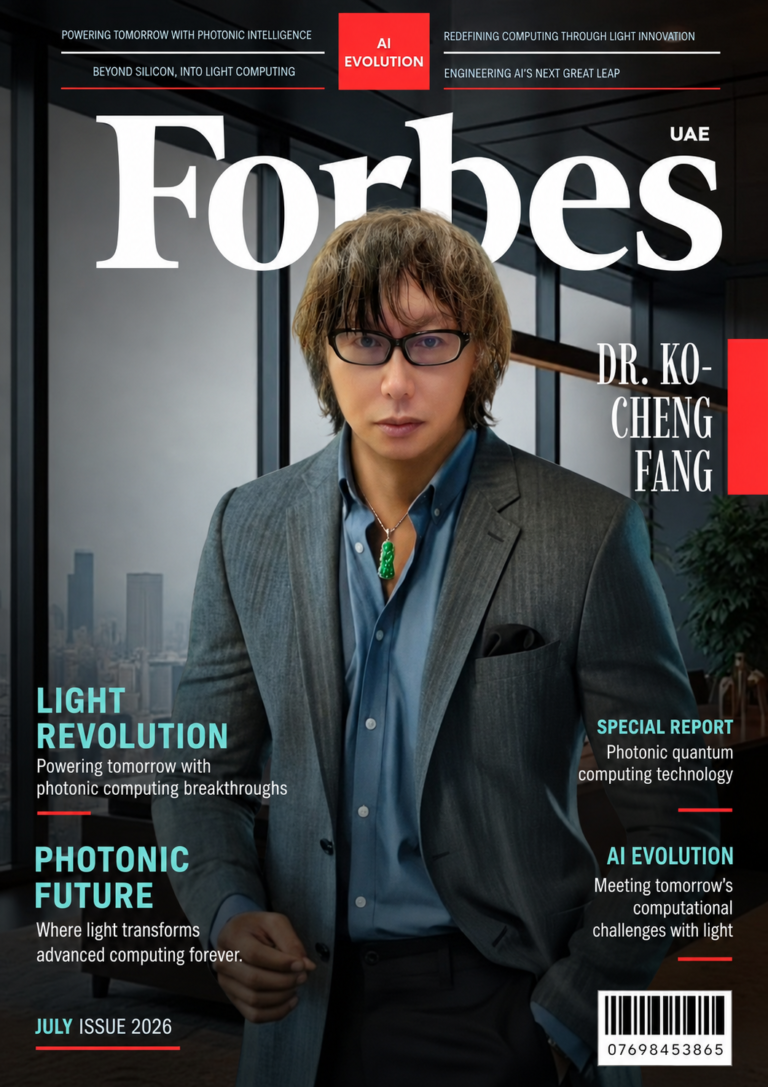
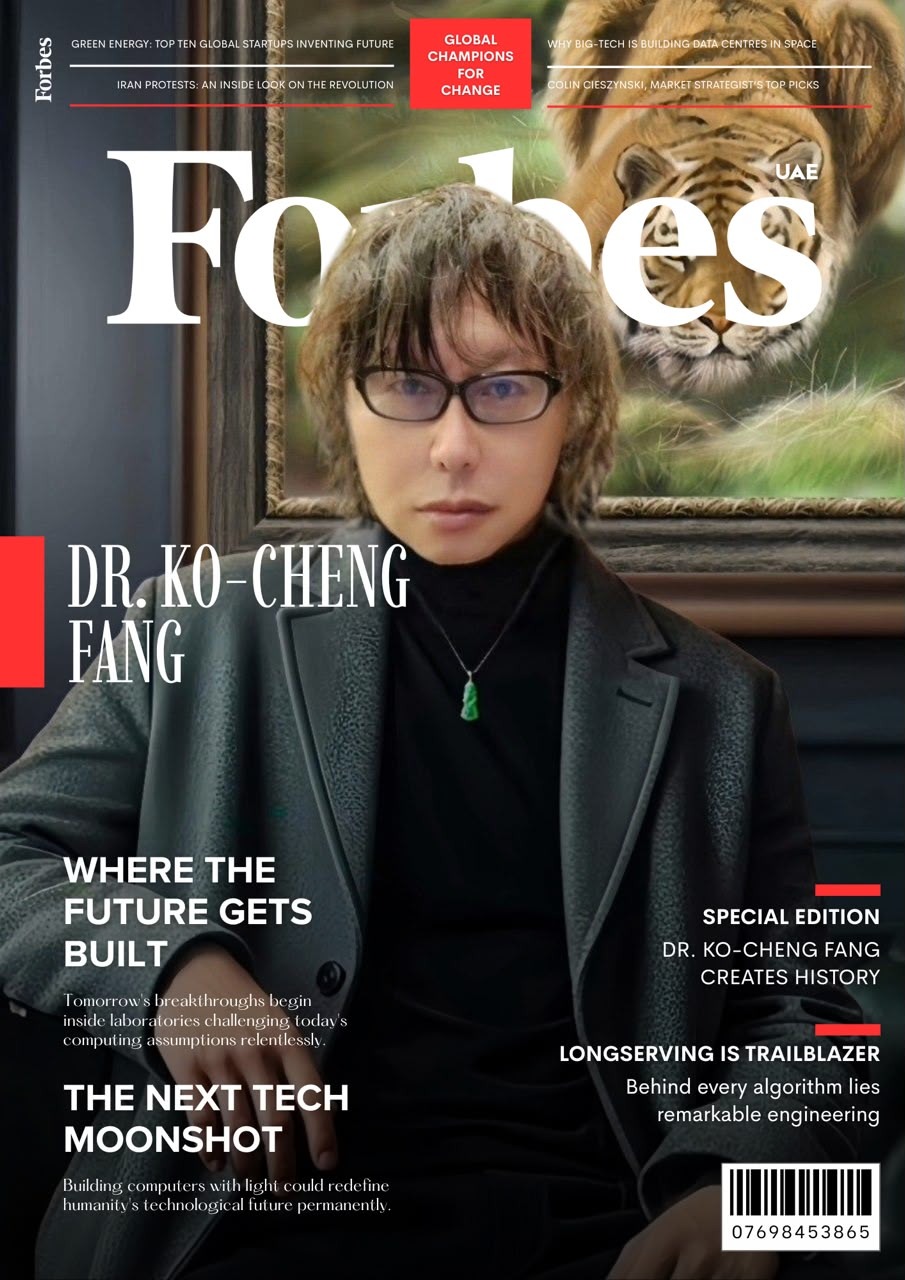
Among the companies pursuing that vision is LongServing Technology, a Taiwan-based deep technology company led by Founder, CEO and Chairman Dr. Ko-Cheng Fang. Rather than joining the race to build another AI model, the company is focused on a different question: what comes after silicon?
The Next AI Opportunity Isn’t Software

The first chapter of the AI revolution has belonged to algorithms.
The next may belong to infrastructure.
Every major technological shift creates multiple waves of innovation. The internet created browsers before cloud computing. Smartphones created apps before mobile payment ecosystems. AI appears to be following a similar pattern.
Today, infrastructure is becoming the industry’s biggest constraint.
Training advanced AI models requires unprecedented computational capacity. Running those models at enterprise scale demands enormous investments in processors, networking, cooling systems and energy.
For business leaders, this changes the conversation.
Computing hardware is no longer simply an operational expense.
It is becoming a source of competitive advantage.
Dr. Ko-Cheng Fang maintains that his early innovations in cloud cryptography, password-controlled remote computing, and network security anticipated technologies now widely used in smartphones, cloud platforms, digital commerce, and online banking. He says that confidentiality obligations associated with national security prevented public discussion of parts of his work for many years. Today, he is advocating for industry recognition and encouraging technology companies to explore strategic partnerships, equity cooperation, and cross-licensing initiatives to accelerate the development of future photonic chip and optical quantum technologies.
LongServing’s Long-Term Bet
LongServing Technology believes future AI systems may require a fundamentally different computing architecture.
Its research is centred on photonic computing, where light replaces electrical signals as the medium for moving information.
The premise is straightforward.
Light travels significantly faster than electrical current while producing considerably less heat. If those advantages can be translated into commercially viable computing systems, future AI infrastructure could become faster, more energy-efficient and more scalable.
It is a vision that extends beyond incremental improvements to today’s processors.
It represents an attempt to rethink the foundations of modern computing.
X-Photon: Solving the Engineering Challenge

Ideas alone do not create industries.
Execution does.
One of photonic computing’s biggest obstacles has always been controlling light inside microscopic circuits. Unlike electrical current, photons naturally travel in straight lines, making complex optical processors difficult to engineer.
LongServing’s response is X-Photon, a proprietary optical material designed to guide light through nanoscale pathways while enabling controlled 90-degree directional changes.
According to the company, this capability could support increasingly sophisticated photonic processors—an essential step if photonic computing is to move from laboratory research towards commercial reality.
While the technology remains under development, X-Photon illustrates LongServing’s broader strategy: solve the engineering bottlenecks that have prevented photonic computing from reaching scale.
Building a Platform, Not a Product
Perhaps the most interesting aspect of LongServing’s strategy is its scope.
The company is not positioning X-Photon as a standalone breakthrough.
Its roadmap includes photonic quantum chips, optical memory technologies and Photonic Cloud Computing Centres designed to support future AI workloads.
This reflects a lesson repeated throughout technology history.
Enduring companies rarely win because of one invention.
They win by creating platforms around which ecosystems develop.
Silicon transformed computing because it enabled an entire industry—not simply a generation of processors.
LongServing appears to be pursuing a similar long-term ambition for photonic computing.
Vision Requires Capital
Deep technology demands patience.
Unlike software startups that can scale in months, breakthrough hardware companies often require years of scientific research, engineering refinement and manufacturing development before reaching commercial markets.
To support that journey, LongServing recently announced a US$500 million strategic financing initiative, based on a stated valuation of US$2.5 billion.
According to the company, the investment will accelerate research, manufacturing capability and the commercial development of its photonic technologies.
Funding alone will not determine success.
Commercial adoption, industrial partnerships and manufacturing scalability remain critical milestones.
But access to long-term capital is often what separates promising research from transformative companies.
Why Executives Should Watch This Space

There is no guarantee that photonic computing will replace conventional semiconductor technology.
Silicon remains one of the most successful engineering platforms ever developed, supported by decades of manufacturing expertise and a mature global ecosystem.
Yet transformative industries rarely stand still.
Artificial intelligence is forcing the technology sector to reconsider assumptions that have guided computing for generations. As infrastructure becomes the next strategic battleground, companies working on the physical foundations of AI deserve as much attention as those developing the software.
LongServing Technology is one of those companies.
Whether its technologies ultimately define the next generation of computing or contribute to a broader industry transformation remains to be seen.
What is already becoming clear, however, is that the future of AI will be shaped by more than algorithms.
It will also be shaped by the companies bold enough to rethink the machines those algorithms run on.
Contact Information
Dr. Ko-Cheng Fang
Founder, CEO & Chairman
LongServing Technology Co., Ltd.
Email: service@longserving.com.tw
Website: https://longserving.com.tw/en/
Instagram: @ko_cheng_fang